Hormones, Stress, & How Your Body Feels—The Overlooked Connection
For women who sense that feeling better in their bodies requires more than expensive supplements and short-term fixes.
Yet almost no one is addressing the system that truly influences how your body feels.
You've invested in gym memberships, personal trainers, yoga, pilates, physical therapy, massage, and you still wake up stiff, achy, and frustrated. That’s because most fitness and healthcare training focuses on muscles and joints—not on the tissue that adapts, stiffens, and reorganizes over time: your fascia.
You don't need more stretching or a new training method. You need the understanding of how fascia responds to daily life, rest, sleep, load... especially as hormones change.
What's Your Body's Stiffness ACTUALLY Costing You?
It's not just discomfort. It's confidence in movement, sleep, and your willingness to fully participate in life .
The hiking trip you passed on because you weren't sure your body could manage it
The quiet loss of confidence as your body feels less familiar
The disrupted sleep because you can't get comfortable or stay comfortable
The moments with your grandchildren that feel harder than they should
The creeping belief that this is "just how it is now"
Here's what you need to know: Over 70% of women experience muscle, joint, and body pain during perimenopause and menopause—yet very few are educated on what’s actually changing in their bodies to drive these symptoms.
Without appropriate education and action, these changes can contribute to long-term physical and cognitive limitations in more than one in four women.
During menopause, changes in estrogen combined with ongoing stress can keep the body in a heightened state of tension—affecting recovery, movement, circulation, and how your body feels day to day.
Without changes in lifestyle and movement, stiffness, pain, and fatigue often begin to reinforce one another.
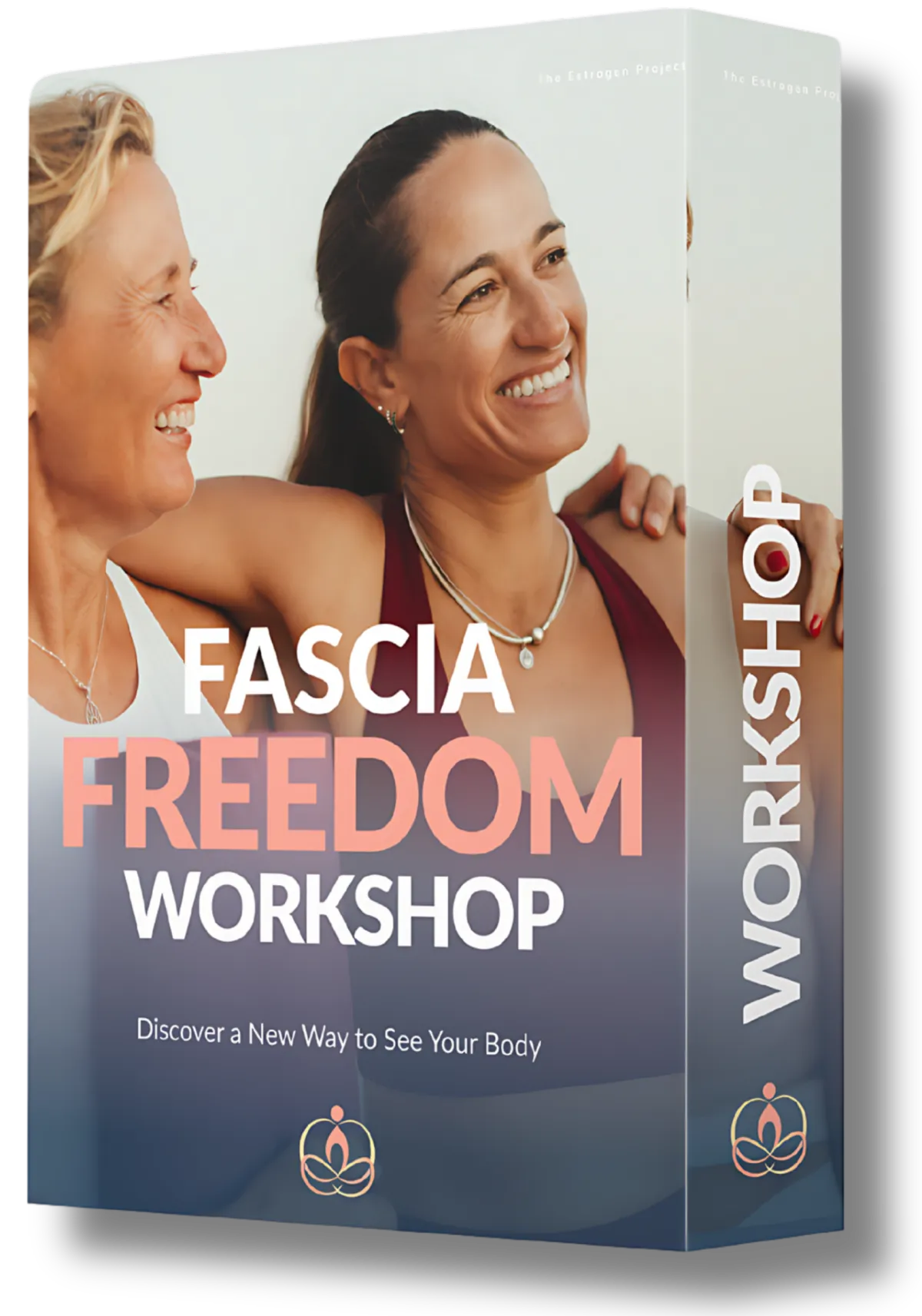
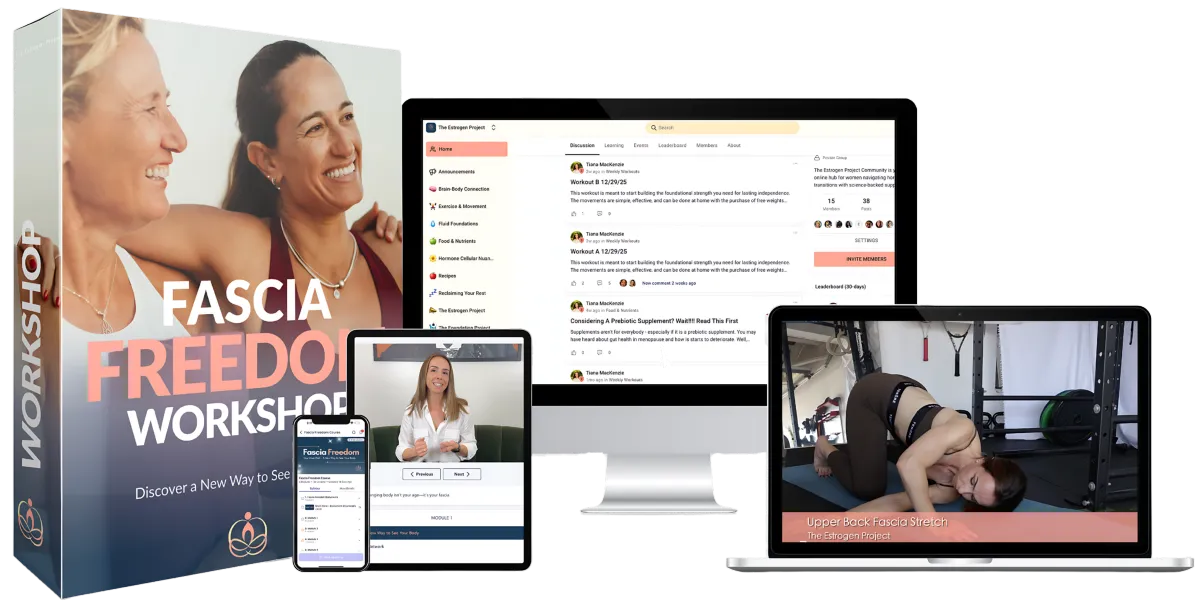
The 5-Module Framework for Understanding Pain and Stiffness, Building Resilience, and Moving Freely
This course shows you how to work with your body—and your fascia—instead of fighting it.
Fascia Freedom is not a stretch library or a collection of exercises. Inside, you'll learn:
✓ A clear explanation on how fascia changes with age, movement, and changing hormones
✓ How fascia influences how you feel
✓ Practical strategies to restore movement ease and tolerance to daily activities
✓ Simple, targeted movement sequences that help your body adapt to progressive load
✓ The ability to recognize what your body needs and make decisions that support it longterm
This is the same education I teach one-on-one across multiple clinical sessions at hundreds of dollars per hour.
Here, it’s delivered to you at a fraction of that investment for $127 USD.
Here's Everything You Get When You Enroll in Fascia Freedom
MODULE 1
Understand fascia and why it plays a central role in stiffness, comfort, and movement confidence during midlife
MODULE 2
Learn how hormonal changes influence how tissue behaves—including new aches and stiffness
MODULE 3
Explore how stress and sleep disruption directly and immediately interact with tissue health
MODULE 4
A practical, adaptable movement approach designed for hormonal transition focused on supporting tissue health and fitness
MODULE 5
Learn to apply the framework to your own body and create a sustainable movement practice that evolves with you over time
The 7-Day Energy Reset
Daily, approachable strategies to help reduce stiffness, support energy, and feel better in your body right away.
Sleep Strategies Guide
A 17-page referenced guide explaining why sleep often becomes more difficult during menopause and what women can do to support deeper, more restorative rest.
3-Day Introduction Workout
A simple, at-home essential movement and strength program with full warm-up for women who are intimidated by using weights or aren’t sure where to begin. Minimal equipment required.
This course is designed to give you understanding first—so every movement decision you make afterward is more effective.
FAQs
Your Estrogen Project Questions Answered
How is this different from physical therapy, yoga, or stretching?
While physical therapy, yoga, and stretching can be beneficial, they often treat symptoms in isolation without addressing the root cause during menopause: the hormonal shift that changes your entire fascial system. Traditional stretching can even aggravate tight, dehydrated fascia. Our approach is different because we start with the hormone-fascia connection, using specific movement protocols that restore hydration and pliability to your tissues first, allowing for true, lasting strength and mobility.
What is fascia, and why is it so important during menopause?
Think of fascia as your body’s intelligent, internal web of connective tissue. It wraps around every muscle, organ, and nerve, communicating constantly with your nervous system. Hormone imbalances impact your fascia, therefore impacting how you move and feel in your body. Understanding and supporting your fascia is the missing link to the "unexplained" aches that happen during this hormonal transition.
Who is this program for? (Perimenopause, Menopause,
Post-Menopause)
This program is designed for any woman who feels like her body is changing in ways she doesn't understand. This includes:
Women in Perimenopause: Identifying the first signs of stiffness, new aches, or changes in energy and sleep, and she wants to be proactive.
Women in Menopause: Actively dealing with a range of symptoms and feeling frustrated with conventional advice and is looking for a better solution.
Women in Post-Menopause: Who want to build resilient strength, maintain mobility, and ensure their long-term functional independence. It’s never too late to start supporting your fascial health and make a profound difference.
How quickly can I expect to feel results?
Every woman's body is unique and feedback consistent. Most women report a noticeable difference in their sleep quality and a reduction in morning stiffness within the first 2-3 weeks of implementing our foundational protocols. It is important to remember that pain and discomfort have many root causes and may take time to address each one. This is why working one-on-one can yield quicker results. More significant shifts in energy, strength, and a decrease in chronic aches will emerge over the three month time period and continue thereafter, however this is fully dependent on the individual and the time they choose to dedicate to reflection, implementation, and helping their nervous system learn to feel safe again.
What kind of equipment is required?
The movements are gentle but powerful and require minimal equipment—typically a set of massage/fascia balls, a yoga mat, a broomstick, and a set of dumbbells or kettlebells to challenge your movements. The program is designed to teach you to release as well as load your body, intelligently. You will receive an email upon sign up with a list of necessary items suggested for optimal outcomes.
I have a specific condition (like arthritis, osteoporosis, or an old injury). Can I still do this program?
Yes. In fact, understanding your fascial system can be a game-changer for managing these conditions. Because our approach is low-impact and focuses on restoring healthy movement patterns rather than high-intensity exercise, it's highly adaptable. Tiana is a licensed Physical Therapist who designs the protocols to be safe and effective. If it's an old injury or surgery, Tiana's specialty is in movement mechanics and identifying the very patterns that are causing pain and discomfort. If you have personal concerns, you may want to consider investing in the one-on-one program for and individualized approach. We always recommend you to consult with your healthcare provider if you are unsure, but the program is built to help you work intelligently with your body, no matter its history.
Which package is right for me?
The Foundation Project is perfect if you:
- Want to understand what's happening in your body and stabilize your symptoms
- Prefer learning in a supportive group environment
- Are comfortable implementing protocols with guidance but not constant hand-holding
- Are looking for a manageable financial commitment to test the waters ($265.67/month for 3 months)
- Like having access to expert knowledge without needing everything personalized to you
- Are early in your hormonal transition journey or just beginning to take action
The Body Sovereignty is right if you:
- Have tried other approaches and need something completely tailored to your specific situation
- Want direct access to expertise and personalized troubleshooting
- Have complex health history, surgical complications, or multiple symptom patterns
- Value efficiency and want the fastest path to results with maximum support
- Are ready to make a significant investment in your long-term health and vitality ($3,197/month for 4 months)
- Prefer 1:1 guidance and want someone to analyze your unique movement patterns and challenges
The key question to ask yourself: "Do I want to learn the method alongside other women, or do I need everything customized specifically for my body and situation?"
Will this help with other symptoms like hot flushes?
Yes. While many women experience menopause and menopause related symptoms differently, there is a large body of evidence that shows women who are physically active experience less overall symptoms during menopause including hot flushes.